The Brain That Never Changed
An essay from The Universal Science of the Sale
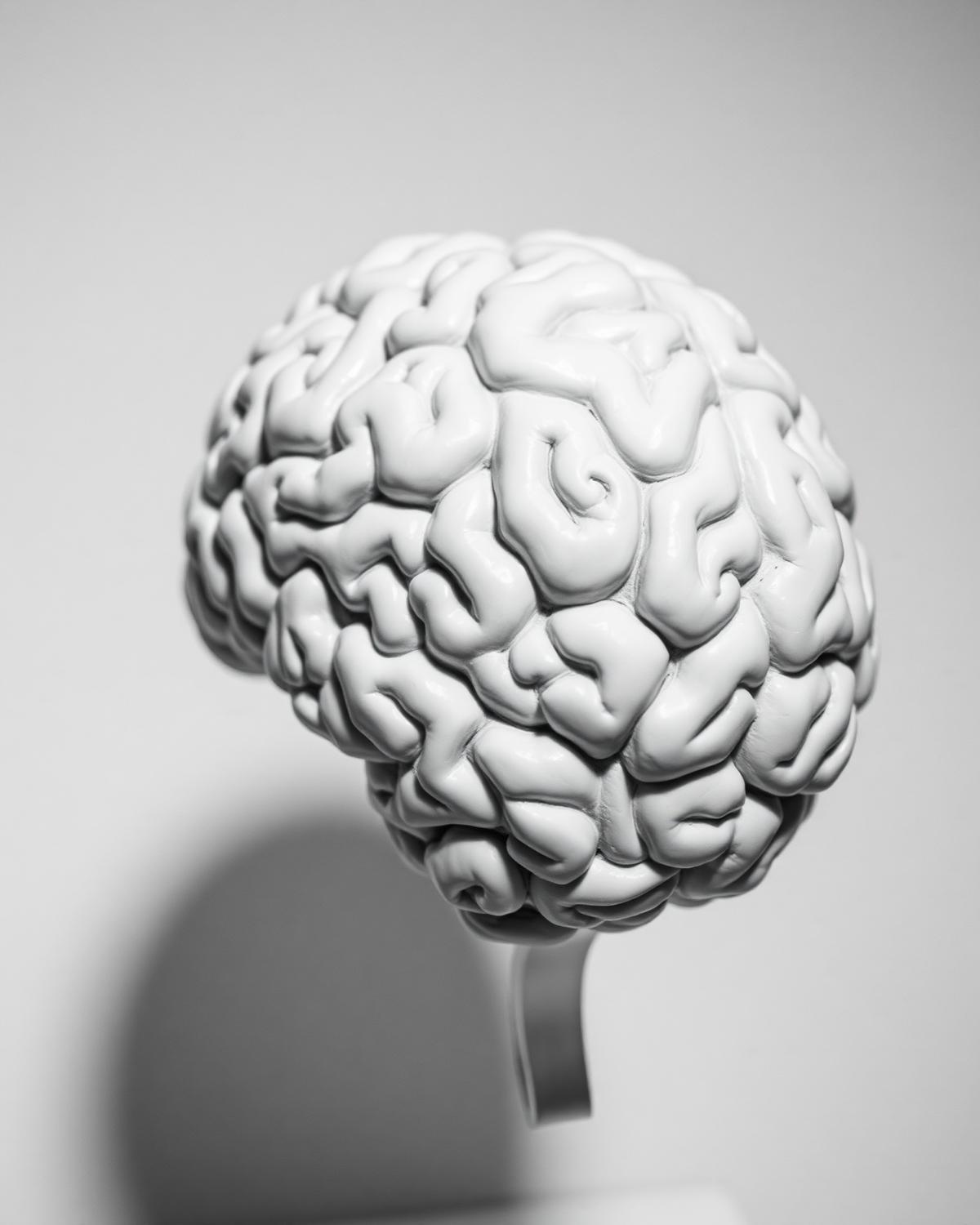
> Every buying decision ever made has been made by the same brain --- > the one that evolved to survive, not to reason. Learn to speak to it > first and everything else becomes considerably easier.
> Every buying decision ever made has been made by the same brain --- > the one that evolved to survive, not to reason. Learn to speak to it > first and everything else becomes considerably easier.
Before we discuss how to sell anything to anyone, I need to take you inside the organ that actually makes buying decisions. Not the logical, articulate part that buyers like to believe is running the show. The ancient, automatic, largely unconscious part that was evaluating threats and opportunities long before money, commerce, or civilisation existed.
This is the foundation of everything in this book. If you do not understand what you are actually talking to when you sell --- what neural systems you are addressing, what evolutionary drives you are activating or failing to activate --- everything else you learn will be aimed at the wrong target, with all the effort and good intention in the world producing results that are a fraction of what correctly directed effort would generate.
The Damasio Discovery
Antonio Damasio, a neuroscientist at the University of Southern California, spent decades studying patients with damage to emotional processing areas of the brain. His initial hypothesis was reasonable: without emotional interference, these patients should become better, more rational decision-makers. Emotion causes impulse purchases, regret, irrational attachment. Remove its influence and you should get cleaner, more logical choices.
What he found was the exact opposite.
His most discussed patient, known in the literature as Elliot, had suffered damage to the ventromedial prefrontal cortex --- where rational processing meets emotional signal. Elliot\'s intelligence was entirely intact. His memory, language, and analytical ability were unaffected. He could hold coherent conversations on complex subjects. He understood cause and effect. He could evaluate options and articulate the pros and cons of each with perfect accuracy.
But he could not decide between them.
Given two ordinary options for lunch, Elliot could enumerate the considerations for each indefinitely, without ever selecting one. The information was all present. The reasoning capacity was intact. The one thing missing was the emotional signal that said this option matters more --- the felt sense of preference that tells the rational mind which direction to go. Without it, the rational brain had no basis for selection. It could analyse forever. It could not choose.
Damasio developed the Somatic Marker Hypothesis to explain the mechanism. Every decision we face has emotional tags attached to it, derived from past experience and survival-related signals, that influence our processing before and during conscious deliberation. These markers are the real drivers of choice. The rational mind\'s role is not to make the decision but to construct a justification for the decision the emotional system has already shaped.
For every seller, this is the most consequential sentence in this book:
> Your buyer is not a rational being who occasionally gets emotional. > They are an emotional being who occasionally uses rationality to > justify decisions already made at an emotional level.
Leading an entire sales conversation with logic --- features, specifications, ROI calculations, comparison tables --- is addressing the part of the brain that was not responsible for the decision in the first place. You are presenting evidence to a jury that has already voted, quietly, in the first minutes of the interaction, based on signals that had nothing to do with your product.
The Three Brains of Every Buyer
Paul MacLean\'s Triune Brain model --- the idea that the human skull contains three evolutionary layers, each with its own logic and priorities --- remains the most practically useful framework for understanding buyer behaviour in real time. I have taught this model across forty countries, and when people grasp it properly, something specific shifts in how they approach every conversation.
The Reptilian Brain --- The Survival System
The oldest structure controls the most primal functions: safety, status, threat detection, territorial response, and the fundamental binary choice of every organism that has ever lived --- move toward reward or away from danger. It is always active, always scanning. It is assessing every environment, every person, running constant background evaluations: is this safe? Is this person a threat or an ally? Am I winning or losing here?
This brain does not speak in language. It speaks in physical sensation --- the shoulder tension before a consciously identified reason for discomfort, the instinct to lean back before the mind has formed the thought, the arm-crossing that happens before the rational mind has articulated an objection. These physical responses are the reptilian brain communicating its assessment before conscious processing has caught up.
In selling, this brain responds before a word has been said about your product. It responds to the energy of the seller --- to the presence or absence of desperation, to whether the seller genuinely does not need this deal or is obviously dependent on it, to whether the environment feels safe or threatening. These assessments happen in the first fifteen to thirty seconds and create a neurological atmosphere --- open or defended --- in which all subsequent conversation takes place.
Addressing the reptilian brain means projecting genuine calm, genuine competence, and the genuine absence of neediness. Not performed calm. The real psychological state of someone with other business to attend to, who finds this conversation interesting but is not existentially dependent on its outcome.
The Limbic Brain --- The Emotional System
The limbic system handles emotion, social bonding, memory, and desire. It makes its initial assessment of another person within approximately seven seconds of encountering them. Not an assessment of their qualifications --- an assessment of whether it likes them and trusts them. That assessment is formed almost entirely on the basis of non-verbal signals, tone, micro-expressions, and accumulated social pattern-matching. By the time the conscious mind has formed an opinion about the seller, the limbic brain has already cast its vote, and the conscious opinion is largely a rationalisation of that vote.
The limbic system stores the emotional memory of every significant experience --- with a brand, a product type, a category of person. When a buyer had a bad experience with a previous supplier in your space, the limbic brain is already carrying that residue. It is not hostile to you specifically. But it is cautious in a way that logic alone cannot address, because the caution is stored as a feeling, not as an articulated concern.
This is why explicitly acknowledging past negative experiences --- rather than pretending they do not exist --- is often the fastest path to limbic trust in competitive replacement scenarios. \"I understand you have had difficult experiences with this type of solution before, and I want to understand specifically what went wrong, because I want to make sure whatever I recommend actually addresses the reasons that happened.\" That acknowledgment does more trust work than twenty minutes of product features.
The limbic brain is also the primary audience for storytelling. Data speaks to the neocortex. A vivid, specific, emotionally resonant story activates the limbic system in ways that mirror how it processes real emotional experience. Princeton research using brain imaging demonstrated that during an engaging story, the listener\'s limbic activation mirrors the storyteller\'s --- the listener effectively experiences the emotional content as a form of their own memory. This is why the right case study, told correctly, does more persuasive work than an hour of product demonstration.
The Neocortex --- The Rational System
The newest, most distinctively human part of the brain handles language, logic, long-term planning, and analysis. It is the part buyers use when they ask for specification sheets, compare proposals, build business cases, or calculate ROI. It is important and it must be satisfied --- particularly in high-value or B2B contexts where decisions are scrutinised by others.
But it is the last of the three systems to engage. The reptilian and limbic systems have formed their responses --- in the first thirty seconds and seven seconds respectively --- before the neocortex has completed its first evaluation cycle. By the time the rational mind is working with the content of the conversation, the earlier systems have already established whether the environment feels safe, whether the seller is liked and trusted, and whether desire has been activated. The neocortex is primarily constructing the justification for a decision that has already been shaped elsewhere.
The error is not in using logic. It is in using logic first, before the systems that actually shape the decision have been properly addressed. Lead with safety for the reptilian brain. Lead with genuine connection for the limbic brain. Then --- and only then --- give the neocortex the data it needs to feel good about what has already been decided.
"It is important and it must be satisfied --- particularly in high-value or B2B contexts where decisions are scrutinised by others."
Loss Aversion --- The Most Powerful Force in Every Buying Decision
In 2002, Daniel Kahneman received the Nobel Prize in Economics in part for research he conducted with Amos Tversky that produced one of the most important findings for anyone who sells anything:
Losses feel approximately twice as powerful as equivalent gains.
Losing one hundred euros produces roughly twice the psychological pain as finding one hundred euros produces pleasure. This asymmetry has been demonstrated across every culture, demographic, and economic context ever studied. It is not cultural. It is hardwired --- a survival mechanism from environments where losing your food supply was existentially more costly than failing to acquire additional food.
Most sales conversations are framed around gain: here is what you will receive, here is how your situation will improve. These frames generate mild interest. What they do not consistently generate is urgency and motivation to act now. Loss framing changes this. Not by manufacturing false scarcity --- sophisticated buyers see through that immediately and it destroys trust. But by making the genuine, real, calculable cost of inaction visible in a way buyers have typically never done for themselves.
Most buyers instinctively feel that not deciding is safe. It is not. Inaction has a financial cost, an opportunity cost, a compounding cost over time. Your job is to help the buyer calculate that cost honestly and specifically --- because the moment they can see it clearly, the investment is no longer competing against zero. It is competing against a continuing, quantifiable loss they had never totalled.
In 2017 I redesigned a pitch process for an Amsterdam software company whose team was performing below potential despite a genuinely excellent product. They were leading entirely with gain frames. We shifted to a loss-framing approach: what exactly is the current process costing in hours per week? What is the hourly cost of those people? What has the last significant reporting error cost the business? The close rate across the team increased by thirty-one percent in the first quarter. Same product. Same price. Different frame. The brain responds to loss.
The Neuroscience of Trust
Trust is not an abstract quality. It has a specific neurochemical basis that is worth understanding operationally.
When a person genuinely trusts someone, their brain releases oxytocin --- the same bonding neurochemical released between parents and children, between close friends in genuine connection. Under its influence, people are more open, more generous, more willing to take risks, and significantly more likely to commit. Under its absence --- when the amygdala is running hot instead --- buyers become defensive, interpret ambiguous signals as negative, introduce more conditions to any agreement, and become fundamentally less likely to buy. Not because of the product or the price. Because of the neurochemical state.
Trust is not a soft, optional nicety. It is the chemical prerequisite for a sale to occur.
Oxytocin is triggered by specific behaviours: sustained warm eye contact, genuine curiosity about the other person, shared authentic laughter, and most powerfully: the clear, felt perception that the seller cares more about the buyer\'s outcome than about making the sale. That last signal is the most powerful trust-builder available and the most difficult to fake. The amygdala is quite sensitive to the difference between genuine and performed care.
The single fastest destroyer of trust is the perception that the seller needs the sale more than they care about the buyer. The moment a buyer detects desperation --- in the slightly too-eager energy, the over-explanation, the willingness to concede things that should not be conceded --- oxytocin drops, cortisol rises, and the room cools in real time, before a word about the product has been spoken.
This is why the most important structural element of a healthy sales career is a consistently full pipeline. Not because more opportunities increase your mathematical chances --- though they do. Because the seller who genuinely has other business to attend to does not desperately need any individual deal. That psychological state transmits itself through every micro-expression, every pause, every word choice. It creates the calm confidence that triggers oxytocin rather than cortisol, and it changes what is possible in every conversation.
Cognitive Ease --- Why Simple Always Outsells Complicated
Kahneman\'s framework distinguishes between System 1 --- fast, automatic, emotional, intuitive --- and System 2 --- slow, deliberate, effortful, analytical. Under normal conditions, including virtually every sales interaction, the brain defaults to System 1 because System 2 is metabolically expensive. Sustained analytical thinking is genuinely tiring. The brain conserves this resource unless the situation clearly demands it.
Cognitive ease is the state in which information flows without friction --- when something is familiar, clearly presented, and uncomplicated. Research shows that cognitive ease creates positive affect: things that are easy to process feel more true, more likeable, and more trustworthy. Things that are difficult to process feel subtly wrong, even when the difficulty is entirely about presentation rather than substance.
The practical implication: every element of complication you add to your pitch generates a mild negative emotional signal that attaches to your product, company, and you. The buyer does not consciously identify the complication. They simply feel less certain --- and they do not buy.
Apple\'s tag line for the original iPod --- \"1,000 songs in your pocket\" --- remains the most cited example of cognitive ease in marketing. The iPod had numerous technically impressive specifications that could have been communicated in complex ways. Instead, the entire value proposition was compressed into five words requiring zero processing effort. Every human being on earth understood it immediately and formed a positive feeling about it before any analysis occurred. That positive feeling is the foundation of every purchase that followed.
Every time you make your offering easier to understand, you make it emotionally easier to say yes to. Simplicity is not a design preference. It is a neurological sales strategy.
> **Key Insight** > > The brain makes buying decisions in the emotional and survival systems > first. Logic justifies; it does not decide. Losses feel twice as > powerful as equivalent gains. Trust is neurochemical and is destroyed > by desperation faster than it is built by anything else. Simplicity > creates positive feelings. Selling to the wrong part of the brain is > the single most expensive mistake any seller makes. > > The correct sequence: reptilian brain first --- safety and calm. > Limbic brain second --- connection and emotion. Neocortex third --- > logic and justification. Every other sequence produces inferior > results.